Premarital Counseling
You've done the hard part of finding each other. This is where you learn how to actually be together.

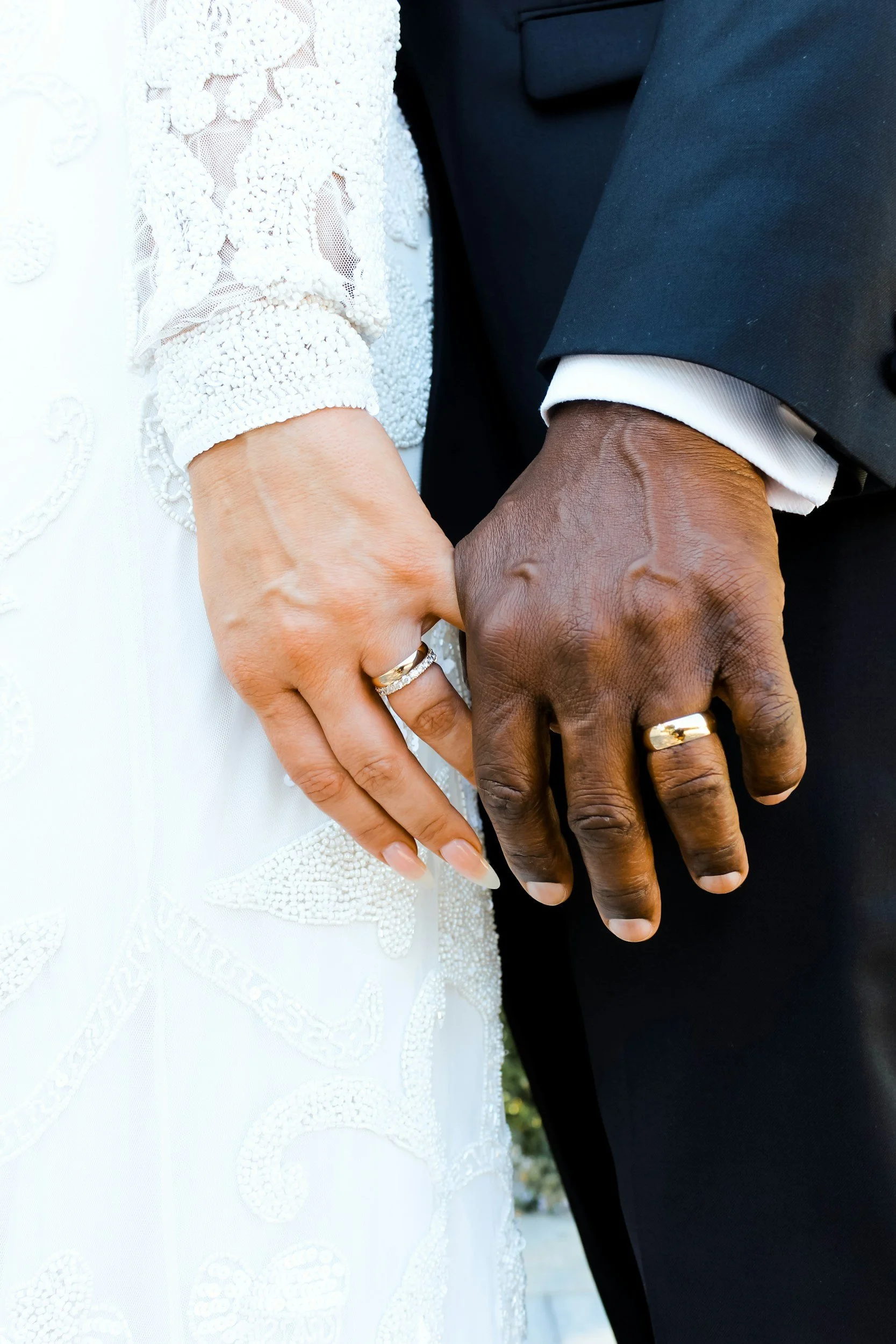
Most couples spend more time planning the wedding than they do preparing for the marriage. That's not a criticism, it's just where the social pressure points. But the wedding is one day. The marriage is everything that comes after.
Premarital counseling at its best isn't a checklist or a compatibility quiz. It's an honest look at the two of you, how you function under stress, what you each bring from your families, where your assumptions about marriage haven't been spoken out loud yet before those things show up as problems.
The couples who find this most valuable aren't the ones who are worried.
They're the ones who are clear-eyed enough to know that love is a starting point, not a plan.
Why do this now
The engagement period is actually the ideal time
You're not in crisis. You're not exhausted by years of accumulated friction. You're motivated, you're hopeful, and you're in a window where the conversations that matter most are genuinely easier to have before roles calcify, before resentments build, before the thing you never quite said becomes the thing you fight about five years from now.
Every couple has the conversations eventually. Premarital counseling just means you have them now, with support, rather than later, when they're harder.
It also gives you something most couples don't have: a shared language for talking about the relationship itself. That turns out to be one of the most useful things you can build together before you get married.
What we actually talk about
The real conversations, not the obvious ones
Most couples have already talked about where they want to live, whether they want kids, and how they'll handle money in broad strokes. The conversations that tend to matter more are the ones underneath those, the ones about meaning, expectation, and how each of you was shaped before you ever met each other.
How you each handle conflict — and what conflict means to you
What you learned about marriage from the one you grew up in
How you'll make decisions when you genuinely disagree
Sex, desire, and what intimacy means to each of you over time
Family — both the one you came from and the one you're building
How you each experience stress, and what you need from each other in it
The role of friendship, independence, and time apart
What repair looks like when things go wrong between you
Money — not just the logistics, but the meaning behind it
What a good marriage actually looks like to each of you
That last one matters more than it sounds.
Partners often carry very different pictures of what a good marriage is and have never compared them.
This work makes those pictures visible so you can actually choose together, rather than each quietly assuming.

The approach
This isn't a course. It's a conversation.
Some premarital programs are structured curricula — workbooks, modules, predetermined topics in a fixed order. That's not what this is. The work is grounded in PACT and EFT, which means it's relational and experiential, shaped around what's actually alive for the two of you.
That said, it's not unstructured either. We'll move through the areas that matter, and I'll bring specific frameworks and tools where they're useful — particularly around how you function as a unit under stress, which is where the gaps in most relationships become visible.
Secure functioning , the idea that your relationship operates as a genuine partnership where both people feel protected and prioritized isn't just a nice concept. It's something you can learn to build deliberately, from the beginning, rather than hope you'll stumble into.
What to expect
How the process works
A first session together
We start with both of you — where you are, what brought you here, what you're hoping to get out of this. This isn't an intake interview; it's the beginning of the work itself. I pay attention to how you are with each other from the first few minutes.
Individual sessions with each of you
I meet briefly with each partner separately. This gives each of you a space to say what might be harder to say with your partner in the room, not secrets, but things that benefit from being named privately first. It also lets me understand each of you as individuals, not just as half of a couple.
The core sessions
Typically three to five 2-hour sessions depending on what comes up and how deep you want to go. We move through the areas that matter, slow down when something deserves more attention, and keep returning to how you actually function together — not just what you believe or intend
A closing session
We end with a deliberate conversation about what you learned, what you want to carry forward, and what you'll do when things get hard — because they will, and knowing that ahead of time is different from being blindsided by it. Some couples also leave with an agreement to check in periodically, which I think of as the maintenance most relationships quietly need.

A common hesitation
"We don't have any problems, do we need this?"
No. You don't need problems to benefit from this. In fact, couples who come in without a presenting crisis often get the most out of it, because there's nothing defensive in the room. You can be genuinely curious rather than reactive.
What you take into the marriage
A shared framework for the relationship. Language for hard conversations. An honest look at each other's patterns before they've had years to entrench.
What you take away from the process
The experience of having navigated something real together, even if it was just a hard conversation , before the wedding. That matters more than it sounds.
The couples who skip premarital work aren't less committed. They're often just more trusting that love will handle it. Love is real and it matters, but it doesn't automatically know how to navigate two people's different nervous systems, family histories, and unspoken expectations. That's a skill set. And it can be built.
Getting started
When to begin
Ideally, three to twelve months before the wedding, early enough that you're not distracted by planning logistics, late enough that the reality of what you're about to do has landed. That said, there's no wrong time to do this work, and couples who come to it after years of marriage often say they wish they'd done it earlier.
If you're recently engaged, newly committed, or somewhere in the middle of wondering whether you're ready, reach out. The first conversation is just that: a conversation. No assessment, no homework, no pressure. Just a chance to see if this feels like the right fit.